










What shapes people’s lives? Is it the range of choices they’re allowed to make, the families they’re born into, the social and economic environments they live in, or simply chance? Nalini Jones’s debut novel, The Unbroken Coast, explores the interplay of these forces with quiet intensity, unfolding a story as intimate as it is universal.
A different Bandra
The crucible for this exploration is a fictionalised version of Mumbai’s Bandra, a world away from the allegedly trendy clubs, cafes, and other venues that many know the suburb for today. Long before that, there were the Kolis, often referred to as the city’s first inhabitants. With the advent of the Portuguese, many from this fishing tribe converted to Catholicism, becoming a part of what came to be called the East Indian community. It is among their environs that The Unbroken Coast is largely set.
This exploration of Bandra and its inhabitants isn’t new territory for Jones. Her interlinked short story collection, What You Call Winter (2007), was also set in a version of the suburb and focused on its Catholic community. The Unbroken Coast revisits some of those characters, specifically the members of the Almeida family. Both books also share the same richly-imagined neighbourhood of houses, streets, schools, shops, festivals, and local associations, where the forces of urbanisation and modernity quietly shape daily lives.
Spanning the decades from the 1970s to the 2000s, the novel features a gallery of characters linked by bonds of family, friendship, and shared history. The two around whom much of the book pivots are Francis Almeida, a retired history professor facing the evening of his life, and Celia D’Mello, daughter of a Koli family, who is on the threshold of hers.
A series of coincidental meetings brings their families together, and over the years, they come to each other’s aid in different ways. The wives, husbands, siblings, children and domestic helps are all given the benefit of Jones’s gracious attention, and they are delineated with care and depth. Life takes new turns through the medium of large and little mishaps – often involving bicycles – that bring people together and tear them apart.
Over time, shifts both personal and collective take shape. Changes in the fortunes of the fisherfolk; the departures of grown-up children; marriage and separation; material changes in the neighbourhood: all these and more fill the pages. Francis struggles to archive both the history of the area as well as remnants of his past, while Celia learns to survive the sudden shocks caused by the selfishness of those she once trusted to care for her.
Time, memory, reality
The novel’s pace is leisurely and the structure episodic. It gently breathes with the rhythm of its characters’ lives and the hard-won realisations they arrive at. However, it also shows evidence of careful patterning. For instance, the appearance and reappearance of statues of Mother Mary or, more broadly, interlocking viewpoints that give us a sense of the whole. All of this is narrated in prose that creates a powerful sense of emotional depth.
Some episodes are profoundly moving, such as a deathbed scene, as well as the aftermath of a stillbirth. The style has overtones of Virginia Woolf, fluidly moving between viewpoints to explore how characters experience time, memory, and reality. In fact, this is made cheekily explicit in the opening of one section: “Mrs Almeida said she would buy the fish herself.”
Jones’s metaphors and similes also go a long way in conveying mood and tone. They are unexpected, yet vivid: waves race in “like couriers with urgent news”; retired life feels like wandering through “a series of empty rooms”; wasted days stack up “like containers on a ship”; high-rise balconies “jerk up like chins”; and thoughts become “thin and bitter, like coins on the tongue”.
Given that the novel covers life in Mumbai’s recent past, the riots following the Babri Masjid destruction and the subsequent bomb blasts inevitably find a place. Jones sensitively shows how these events affect her characters, a typical reaction being: “This was what the world did: press in on you with its bad-news this and so-sad that, snatch away what little time you had to see to your own affairs …” Yet, much of her account of that time leans toward the factual and reportage-oriented, a approach slightly at odds with the rest of the book.
At one point in the novel, a domestic help learns how to play online solitaire as a way to fill the lonely spaces in her days. The Unbroken Coast is itself a bit like that game: characters, in the manner of cards, follow their own paths – sometimes stalled, sometimes advancing – to interact in patterns that gradually reveal a deeper narrative of chance and choice, weaving a tapestry of setbacks and persistence.
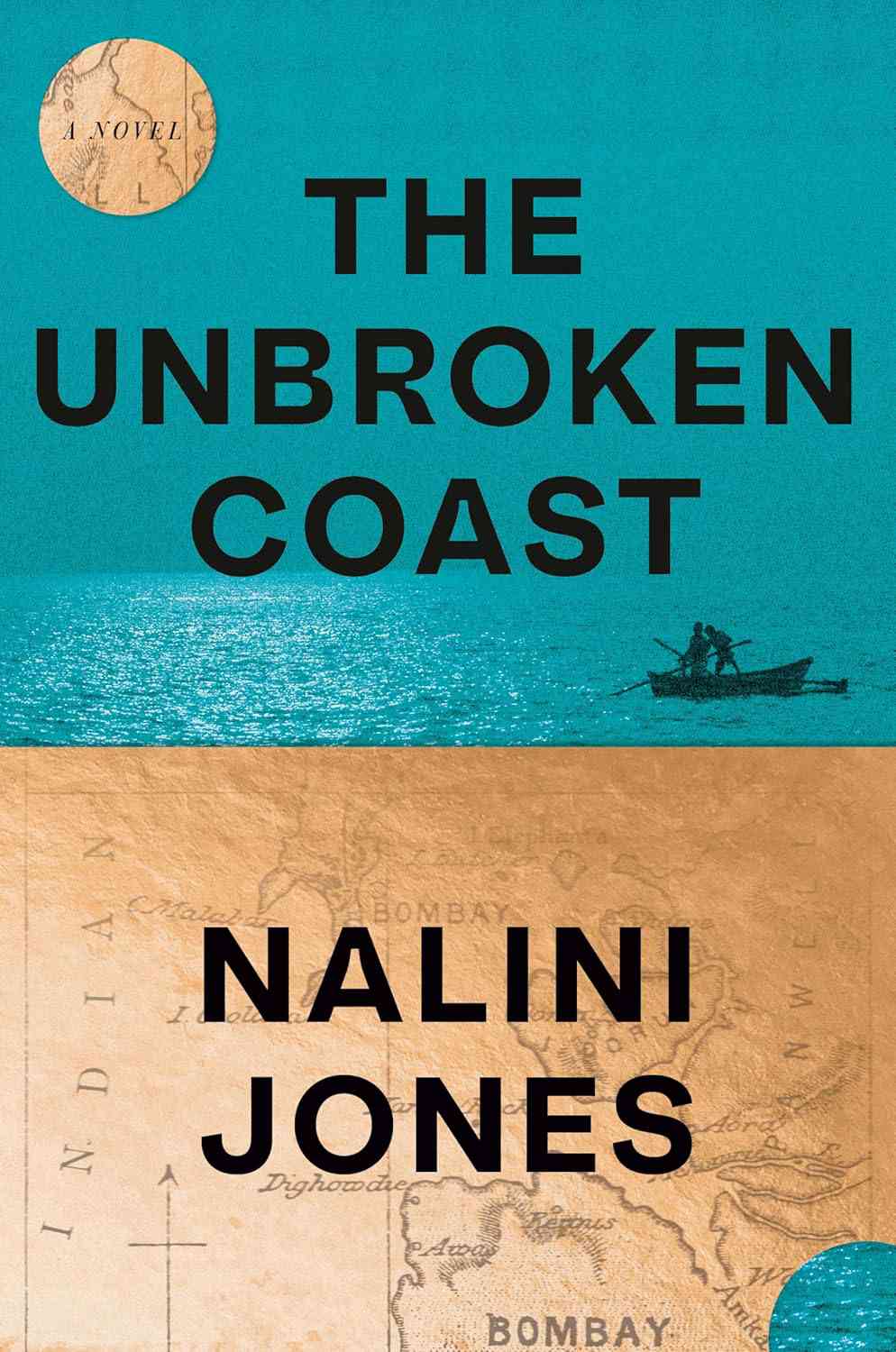
The Unbroken Coast, Nalini Jones, Knopf.
